When Professionals Influence the Product Journey.
For many rehabilitation, assistive and adaptive products, the path to purchase may involve a physiotherapist, occupational therapist, orthotic or prosthetic professional, rehabilitation specialist or another knowledgeable advisor.
Inclusia evaluates where professional awareness matters, what information the market needs and how relevant clinical channels fit into the broader Canadian route to market.
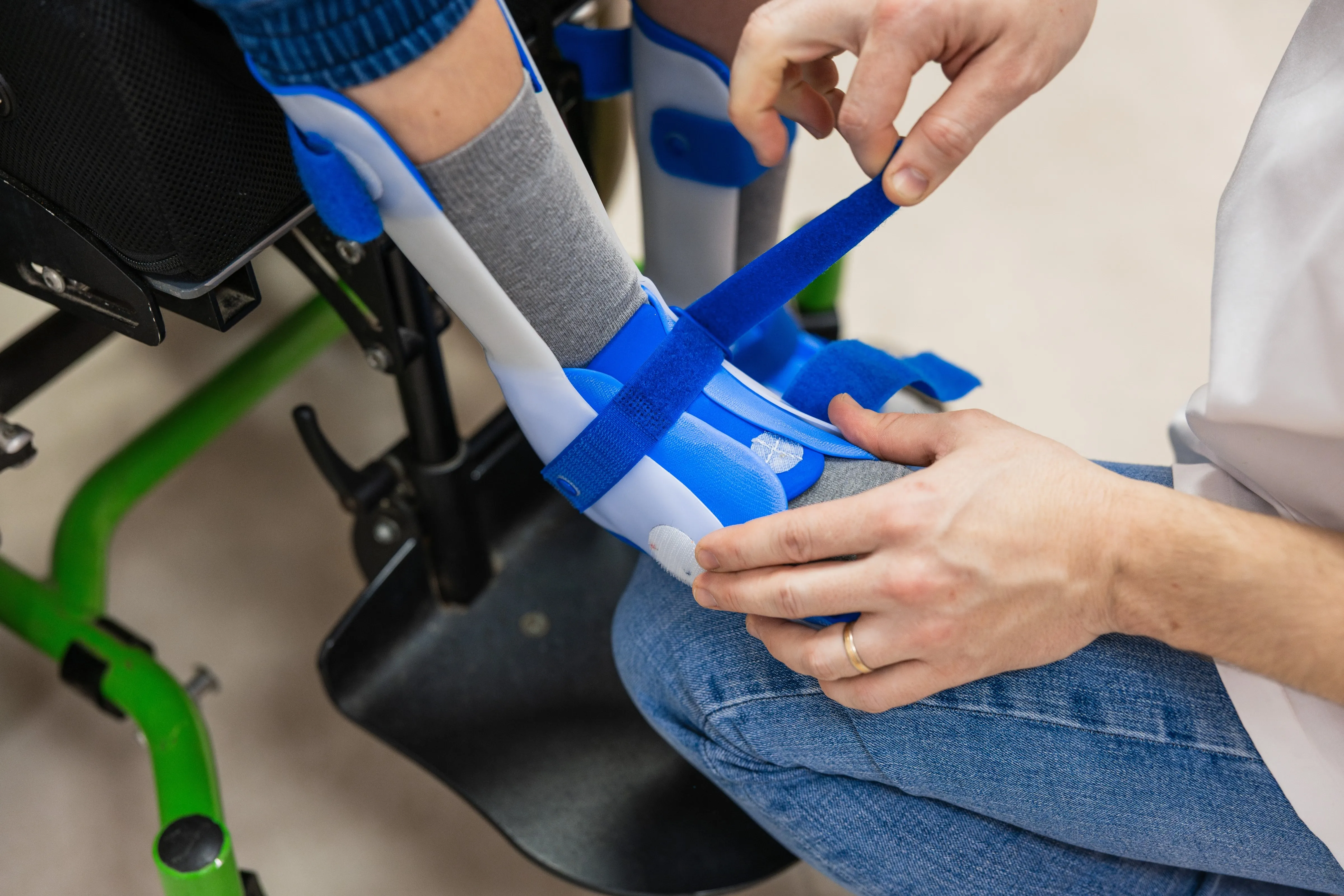
Some Products Need More Than Consumer Awareness.
Function
Professionals may help users understand whether a product addresses a practical need.
Compatibility
Relevant products may involve orthoses, braces, mobility equipment or individual-use requirements.
Education
Specialized features often require clear explanation.
Confidence
Clear product information can help professionals understand where a product may fit within their work.
Where Relevant Products May Intersect With Professional Care.
Rehabilitation
Physiotherapy and occupational-therapy environments where relevant.
Orthotics & Prosthetics
Products where device compatibility, fit or physical function can influence selection.
Clinics & Specialized Practices
Relevant products that may benefit from professional awareness or evaluation.
Community & Care Environments
Where appropriate, products supporting mobility, independence, aging or daily living may intersect with community-based care pathways.
Clinic or rehabilitation provider interested in our brands? → Retail & Clinical Partnerships
Education Before Promotion.
A professional audience needs clear product information, not marketing hype.
Where clinical or rehabilitation channels matter, Inclusia focuses on communicating what the product is, how it functions, who it was designed for, important limitations and how customers can access it.
What Professionals Need From a Product Manufacturer
Professionals extend awareness to products they can stand behind operationally. That requires the manufacturer to supply:
Clear intended use
What the product is designed to do.
Appropriate claims
Evidence and wording that actually support what is said.
Compatibility information
Where fit, devices or other products interact.
Contraindications and limitations
Where relevant to the product.
Product selection guidance
Who it may — and may not — suit.
Instructions
Clear professional and consumer information.
Availability
How the user obtains the product after a recommendation.
Support
Who answers product questions when they arise.
Inclusia helps organize and deliver this information into the right channels — it does not write clinical evidence.
Professional Awareness Is Not the Same as Clinical Endorsement
A clinician knowing about a product is different from a clinician endorsing, prescribing or clinically validating it. Inclusia's role is to help appropriate professional audiences understand relevant products where those channels matter — not to manufacture clinical endorsement.
Professional influence also leads to different purchase mechanisms, and there is no universal model: a professional may identify a need and the user purchases directly; a practice may order the product itself; an institution may run a procurement process; or, where applicable, a funded program may provide an approved pathway. Which mechanism applies depends on the product and the setting — the funding side of this is covered on Why Canada, and category-specific pathways live on the Markets pages.
Medical Device Distribution in Canada: MDEL vs. MDL
For products that meet Canada's definition of a medical device, the regulatory structure can involve both device-level and establishment-level requirements. Health Canada generally requires importers and distributors of medical devices to hold an active Medical Device Establishment Licence (MDEL), subject to applicable exemptions. A Medical Device Licence (MDL) is different — it is issued to the manufacturer at the device level. The requirements depend on the product, its classification and the proposed Canadian distribution structure.
MDEL — Medical Device Establishment Licence
An MDEL addresses establishment-level importing and distribution activities. Health Canada generally requires importers and distributors of medical devices to hold an active MDEL, subject to applicable exemptions. It is not a product approval and is not attached to an individual device.
MDEL holders also have regulatory responsibilities associated with their licensed activities — depending on the establishment's activities and device classes, Health Canada requires documented procedures covering areas such as complaints, recalls and distribution records, with additional obligations applying to certain importing or distribution activities.
MDL — Medical Device Licence
An MDL is a device-level licence issued to the manufacturer. Class II, III and IV medical devices generally require the applicable MDL before they may be imported or sold in Canada. Class I devices do not use the same device-level MDL framework, though establishment-level requirements can still apply depending on the parties, activities and applicable exemptions.
Clinical relevance does not determine whether a product is a medical device. Classification depends on the product, intended use and applicable Canadian requirements.
Does a Canadian medical-device distributor need an MDEL?
What is the difference between an MDEL and an MDL?
Regulatory and licensing requirements are evaluated as part of each potential Canadian distribution partnership. This overview is provided for Canadian market-entry context and does not replace product-specific regulatory advice or Health Canada requirements. Sources: Health Canada, Guidance on medical device establishment licensing (GUI-0016) · Health Canada, Medical Devices Active Licence Listing (MDALL)
Building a Professional Channel.
Does professional awareness actually influence adoption?
Which professional disciplines encounter the relevant need?
Translate manufacturer knowledge into useful market-facing material.
Introduce the product to appropriate channels where commercially relevant.
Ensure product availability and customer support match the market strategy.
Use recurring questions to improve education and positioning.
Product Requirements Come First.
Clinical relevance does not determine regulatory status. Requirements depend on the product, intended use and applicable Canadian rules.
Regulatory and licensing requirements are evaluated as part of each potential Canadian distribution partnership.
Manufacturers should obtain appropriate professional regulatory or legal advice where required.
Specialized Products Can Cross Channel Boundaries.
BILLY Footwear illustrates how a consumer product can also intersect with orthotic, rehabilitation and specialized-fit considerations.
Inclusia’s Canadian experience with BILLY has reinforced the importance of product information, fit understanding, customer support and multiple routes to discovery.
BILLY Footwear is Inclusia’s exclusive footwear distribution partner. Inclusia does not represent other footwear manufacturers.
About BILLY Footwear →Categories Where Professional Channels May Matter.
Clinical & Rehabilitation Distribution
Does Inclusia sell through clinics?
Relevant products may use clinical or rehabilitation channels where those environments affect evaluation, recommendation, purchase or customer awareness.
Does Inclusia have relationships with healthcare professionals?
Inclusia has experience with specialized professional and clinical channels, but individual relationships and account information are not represented publicly unless specifically approved.
Can Inclusia get a product into hospitals?
Institutional opportunities vary substantially by product, buyer, procurement process and regulatory requirements. Inclusia evaluates those opportunities where they are relevant rather than promising placement.
Does Inclusia provide clinical training?
Inclusia may support product education and market-facing information. Formal clinical training should only be represented where an approved program exists.
Does a clinical product automatically require a medical-device licence?
No universal conclusion should be drawn from channel alone. Regulatory status depends on the product and applicable Canadian requirements.
Does Professional Awareness Matter to Your Product?
Introduce your product and tell us where professionals influence its journey. We'll evaluate whether clinical and rehabilitation channels belong in the Canadian strategy.
Clinic or rehabilitation provider interested in our brands? Retail & Clinical Partnerships →